Tales from the Pearl of Africa
“For magnificence, for variety of form and colour, for profusion of brilliant life – bird, insect, reptile, beast – for vast scale – Uganda is truly ‘the Pearl of Africa.'”
Winston Churchill
Article by Jake Kyle
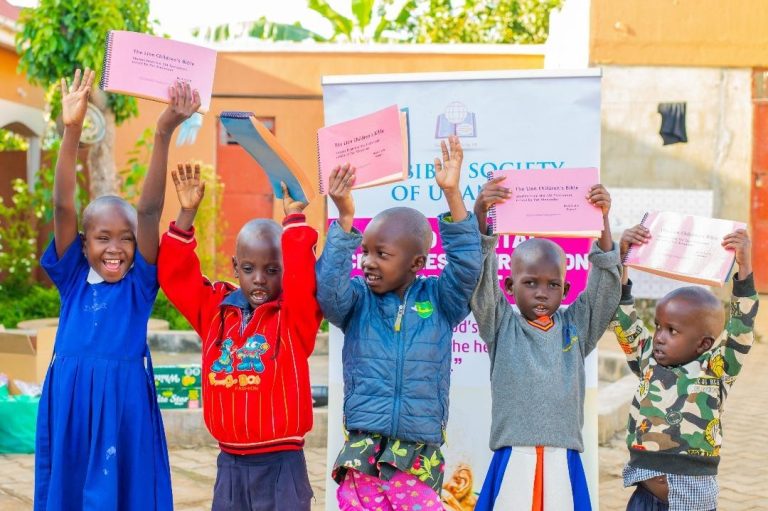
This January I had the great privilege of being invited by the Bible Society of Uganda to represent Compass Braille at their summit entitled ‘Enhancing Scripture Accessibility for Blind and Visually Impaired People’. Having worked for Compass Braille for over 20 years, it was the first time I had had the opportunity to meet, face to face, recipients of the braille Bibles we produce. It was a truly memorable experience which I will cherish for many years to come.
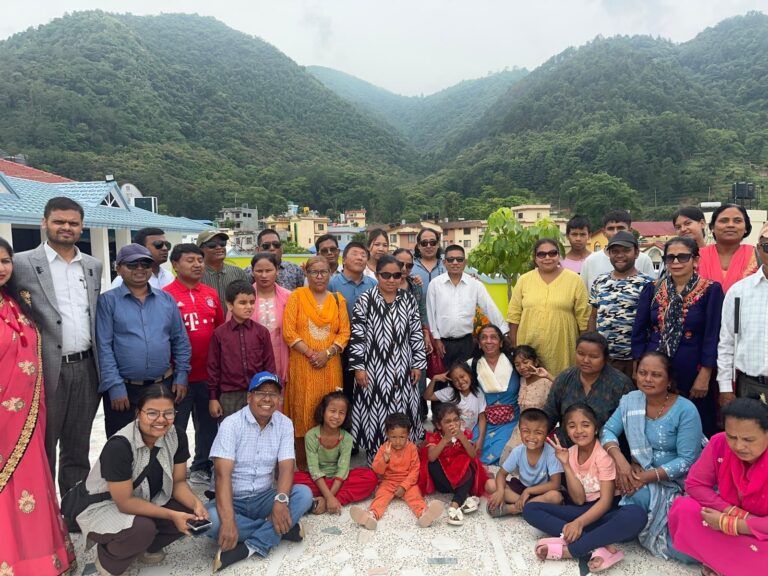
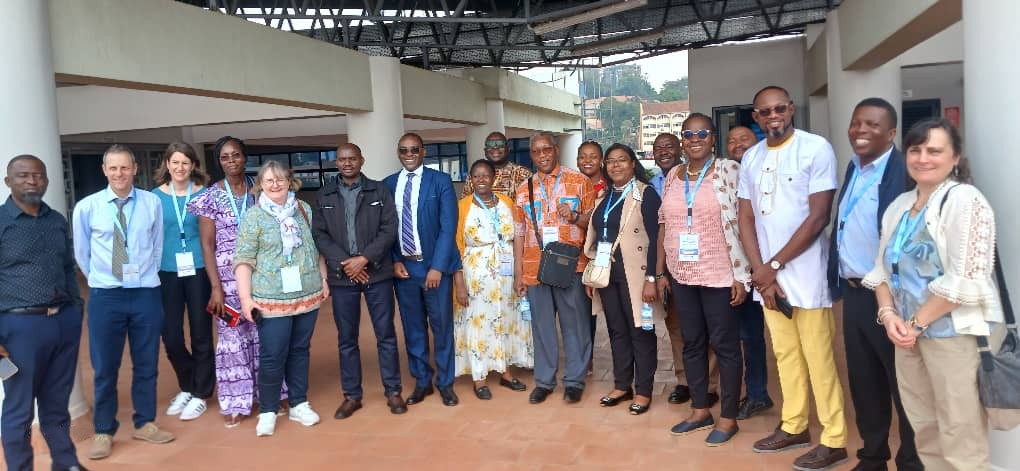
Also invited were representatives from Bible Societies of 12 African countries: Angola, Benin, Ghana, Kenya, Lesotho, Liberia, Malawi, Mozambique, Rwanda, Tanzania, Uganda, Zimbabwe as well as Katie Badie and Csilla Vita-Molnar from UBS and Silke Gabrische from the German Bible Society – a significant financial donor to Bible Society projects for visually impaired people (VIPs).
The Bible Society of Uganda (BSU) has been a major recipient of braille Bibles from Compass Braille over the years and also a shining example of how to engage blind and visually impaired people with the Scriptures, and so the summit was particularly relevant for all of us who were there. The summit was also to include the launch of the latest braille Bible which Compass Braille has produced for BSU – in the Lusoga language.
Day 1: Kampala
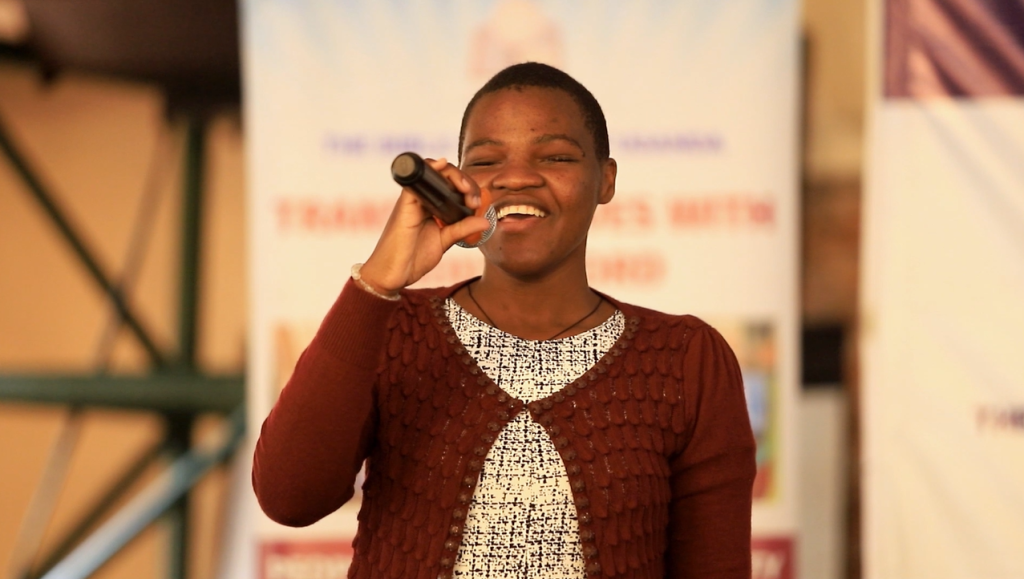
The summit began with a glamorous publicity event at a hotel in Kampala, designed to highlight and celebrate the work of BSU among VIPs. The national press was there along with many important guests and speakers, including children from schools for the blind and former Prime Minister of Uganda, Amama Mbabazi. A young boy read from a braille Bible and a girl, Fiona, recited the whole of John’s Gospel Chapter 15 having memorised it with the help of a braille Bible. All this was interspersed with choirs singing, dancers dancing and testimonies from VIPs. At one point I was presented with a certificate of appreciation for Compass Braille’s work by Justice of the Supreme Court of Uganda Mike Chibita, who is also President of BSU.
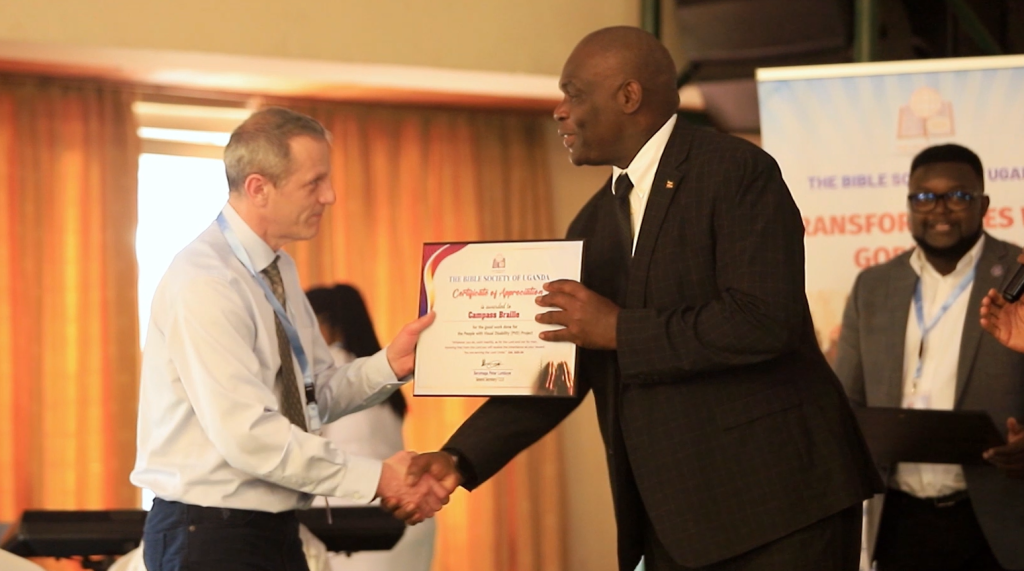
In the afternoon we ‘international’ delegates were driven to a town in the Eastern region of Uganda called Iganga where Lusoga is the main language spoken.
Day 2: Sensitisation Workshop
In the morning of Day 2 we participated in a ‘sensitisation’ workshop for local church leaders organised by BSU. The aim was to encourage and train the leaders in how to include blind and visually impaired (VI) people in their congregations.
There was an emphasis on the importance of seeking out VIPs in their communities because there is a tendency for VIPs to be hidden away. It was also noted that holistic care including providing food, literacy training and trauma healing will often be needed before braille Bibles will be of use. VIPs gave testimonies of how they had been able to contribute much to church life once included.
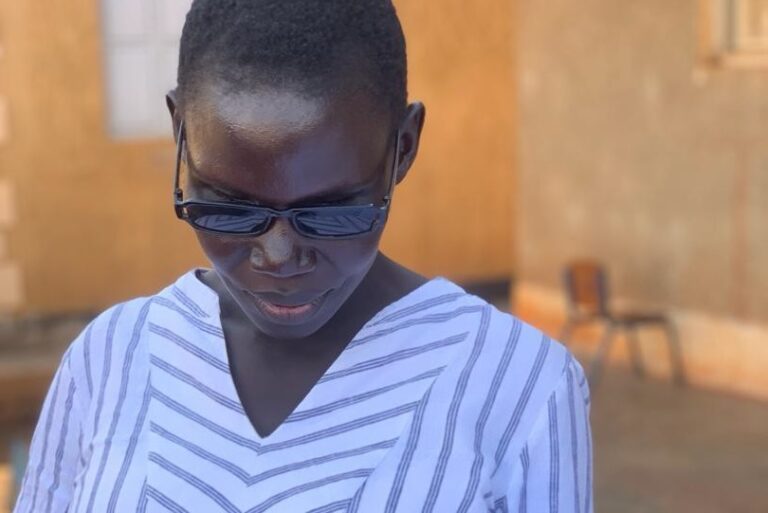
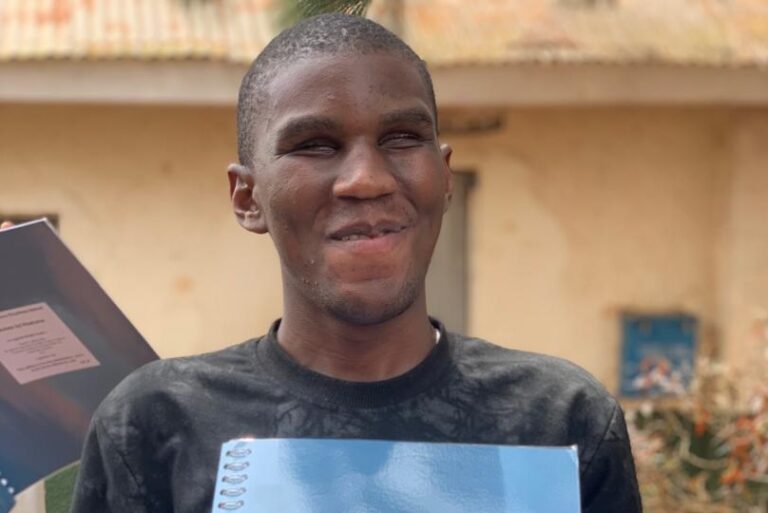
A highlight for me was meeting two of the proof readers who had helped me transcribe the Lusoga braille Bible, Anna Aparo and Paul Kitamirika. Paul shares his story below.
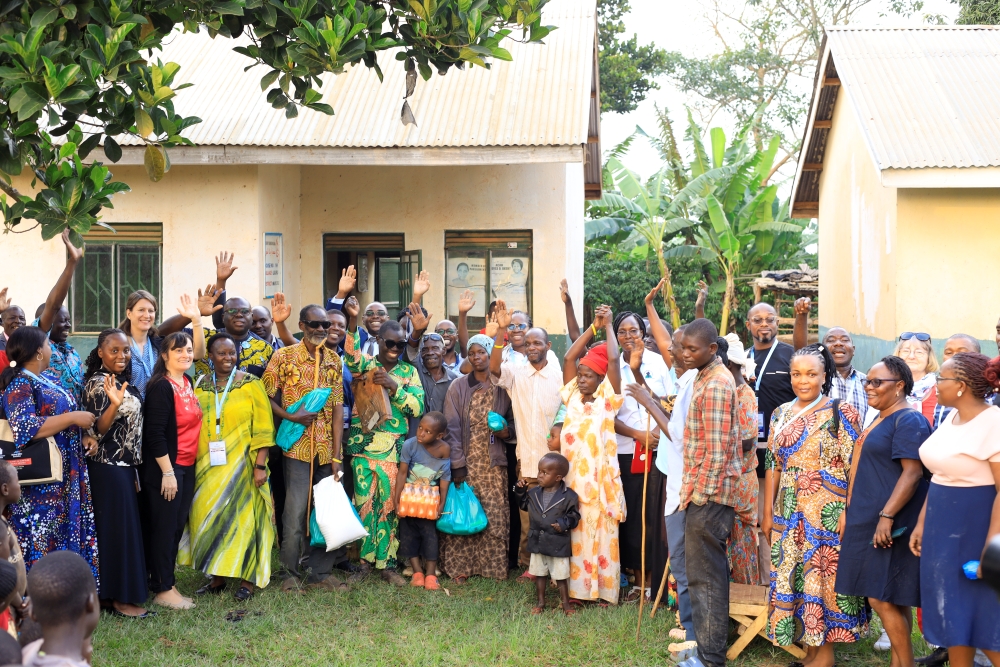
In the afternoon we drove a couple of hours into the countryside to a village called Luubu, home to 20 families with visually impaired (VI) members. This unique village was founded about 25 years ago by a group of such families from the area. They live and work together, supporting one another. It was clear that most in the village have a strong Christian faith, evidenced by the village leader, Moses, giving a powerful speech proclaiming that even though they are experiencing physical disability in this life they were looking forward to receiving perfect bodies in the age to come.
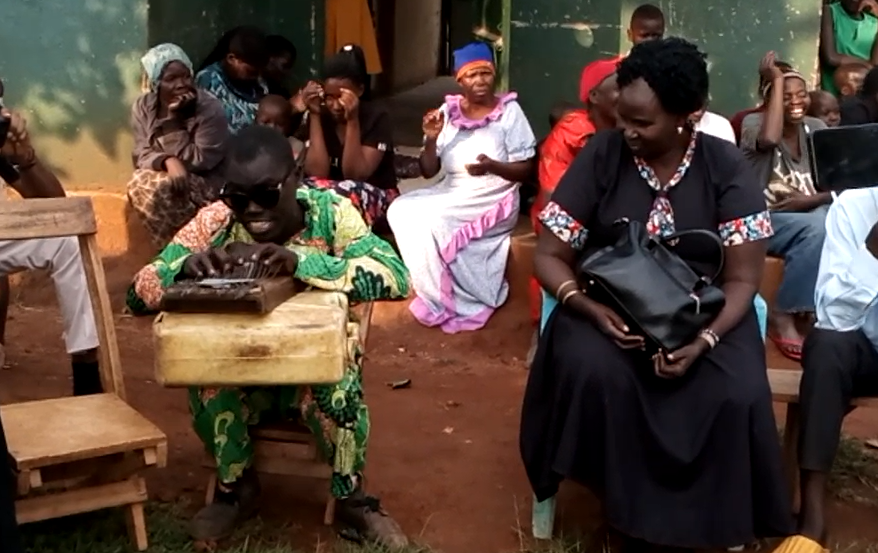
Whilst there, Peter Waiswa, an incredible musician and singer who is also blind, sang a song about Jesus being his number one on an instrument he had made himself.
Day 3: Lusoga Braille Bible Launch
On Day 3 the official launch of the Lusoga braille Bible took place in the grounds of a school near Iganga. Seated alongside us international visitors, who were somewhat awkwardly placed at the ‘top table’, were regional church leaders from all the main Christian denominations. Also present were many VIPs ‘motorbiked’ in from the surrounding area (on the back of a motorcycle seems the main mode of transport for most Ugandans whether blind or sighted!).
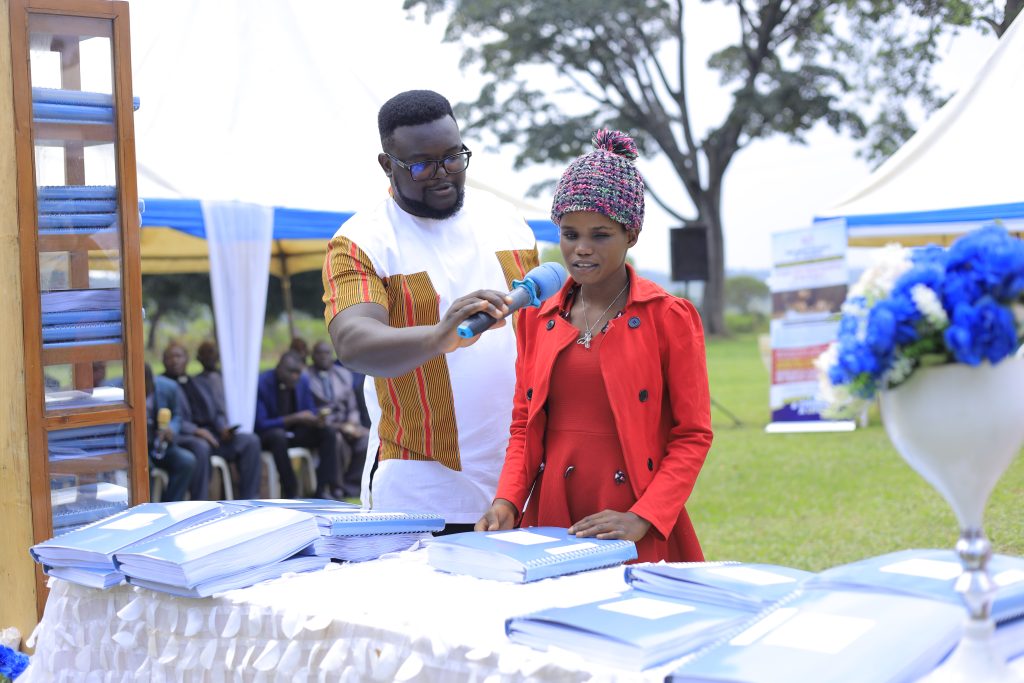
It was a truly joyous occasion beginning with a choir singing beautiful African worship songs followed by several dignitaries delivering speeches. Then a hush descended as 15-year-old Jesca Nalumansi, who had recently completed the equivalent of her GCSEs, took centre stage. The atmosphere was tense with anticipation as Jesca began to give the first official public reading from the Lusoga Braille Bible. She read flawlessly from Acts Chapter 2, recounting in the Lusoga language the coming of the Holy Spirit at Pentecost.
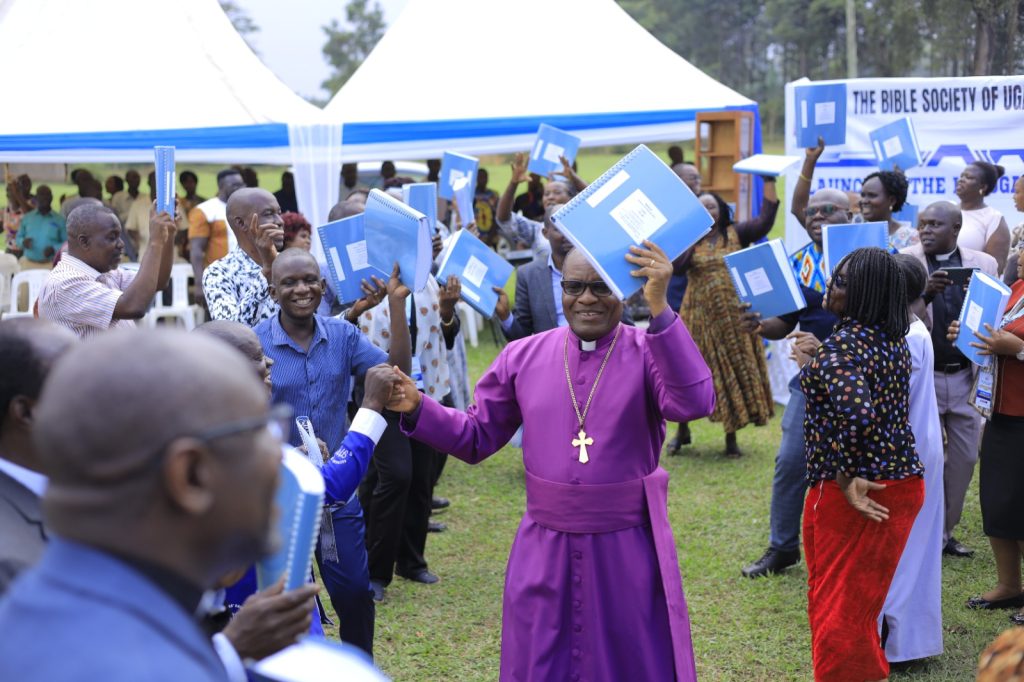
It was followed by exuberant worship, praising God with singing and dancing, in which we all participated. It truly felt like an echo of the first Pentecost experienced by the early Church as described in the Scripture we had just heard!
Certificates of appreciation were presented to those who had been involved in the Lusoga braille Bible project.
Day 4: Rediscovering the source of the White Nile
This was the last day of the summit and it was an opportunity for us delegates to get to know one another better as we travelled back to Kampala. We stopped at Jinja to visit the source of the White Nile as it bubbled up from a spring on the edge of Lake Victoria. We also travelled down some bumpy dusty roads, through rural villages, to some powerful waterfalls further downstream on the White Nile.
It was a valuable time for strengthening relationships with Bible Societies who already received braille Bibles from Compass Braille and forging new ones with those with whom we may work in the future. New projects were discussed including one to produce a braille Bible in the Asante Twi language of Ghana.
Paul’s Story
Paul Kitamirika was one of 4 proofreaders of the Lusoga braille Bible. Here he tells his story:
I lost sight when I was about to finish high school. It was a very bad experience in my life. I lost hope because I did not know that there was a method of reading and writing for people with visual impairment.
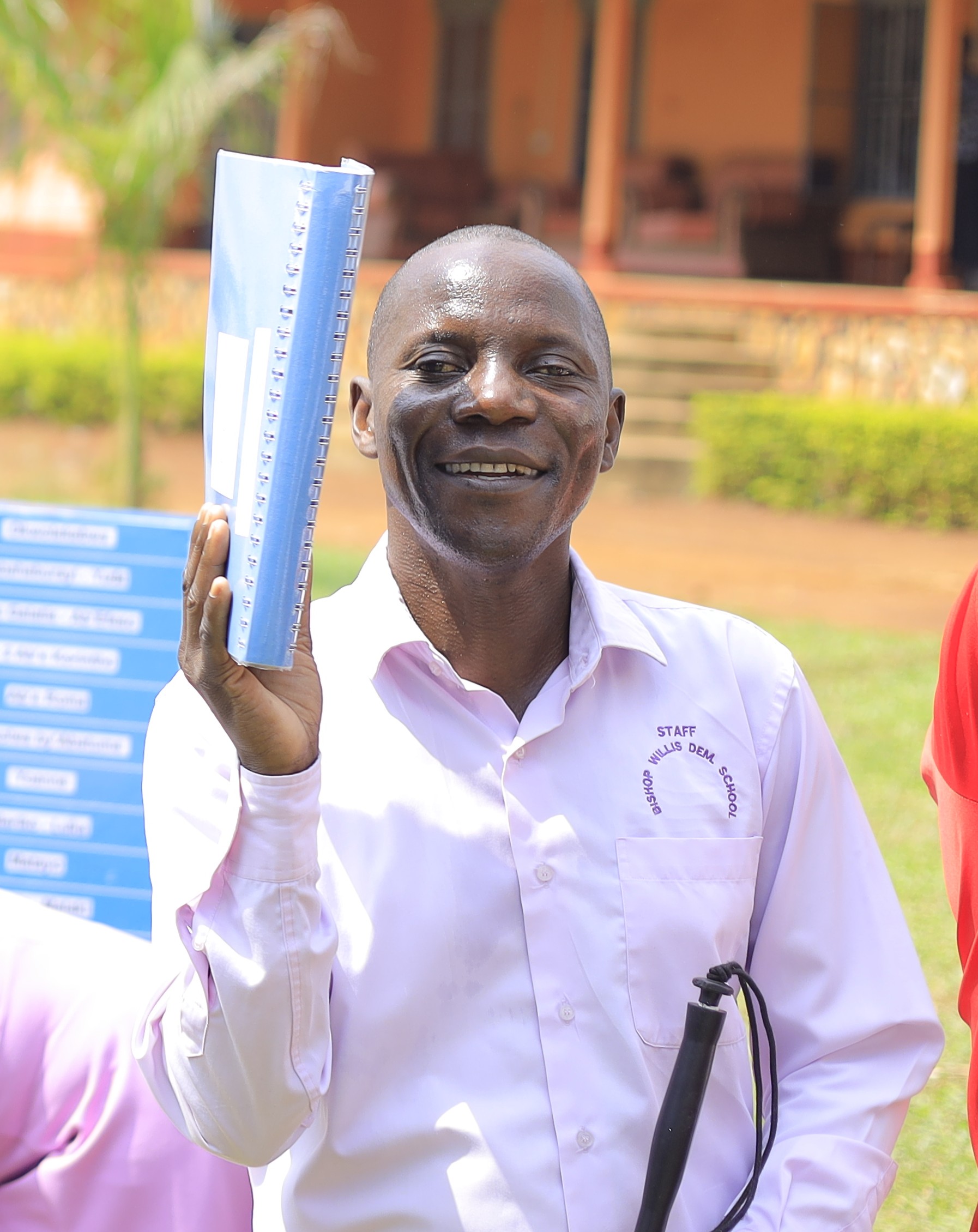
My eye doctor referred me to Bishop Willis Demonstration School to learn braille. At the above school, I found teacher Anna [Aparo] as the braille teacher. During the teaching process, she gave me braille books, magazines and Bibles from Torch Trust and Compass Braille to read while practising how to read braille. In doing so, I picked up interest in the word of God.
I joined teachers college for my grade III certificate. I came back to Bishop Willis Demonstration School as a teacher.
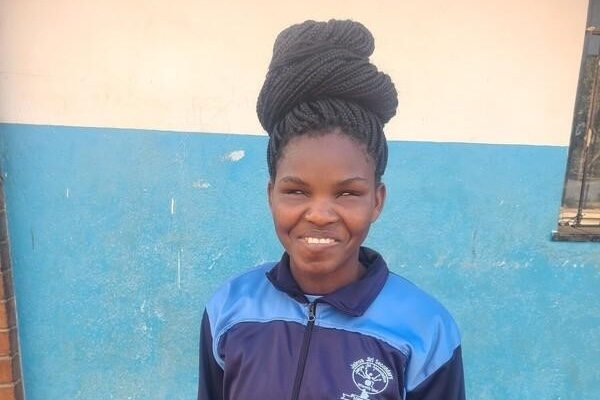
When teaching braille, I use braille Bibles and other books from Compass Braille to teach children how to read braille. Saleh, Jesca and Martha were my pupils in primary. Martha became a teacher and she is teaching with us, Saleh stopped in primary seven because he is a total orphan. Jesca had just completed ordinary level and this year she will be joining high level.
I read the braille Bibles and preach to the children. This has led some of them to be converted to Christianity. For example Saleh who is now a gospel singer. I use the braille Bibles to preach in the local churches. People yearn to see me reading and explaining the word of God because many could not believe a blind person can do that. I have been using the English braille Bible while interpreting it to the local language. With the attainment of the Lusoga braille Bible, it will make my preaching easier and real to the people to whom I preach.
With the braille Bible, I attained a certificate in theology and I was ordained as a Deacon in my church.
Therefore, with the braille Bibles, the visually impaired persons have been transformed.
(From Paul Kitamirika. Bishop Willis Dem. School, Iganga)